

Trauma Centre Trauma Sensitive Yoga (TCTSY)
Trauma Centre Trauma Sensitive Yoga (TCTSY) is about creating an opportunity for you to safely (re)connect with your body.
About Trauma Sensitive Yoga (TCTSY)
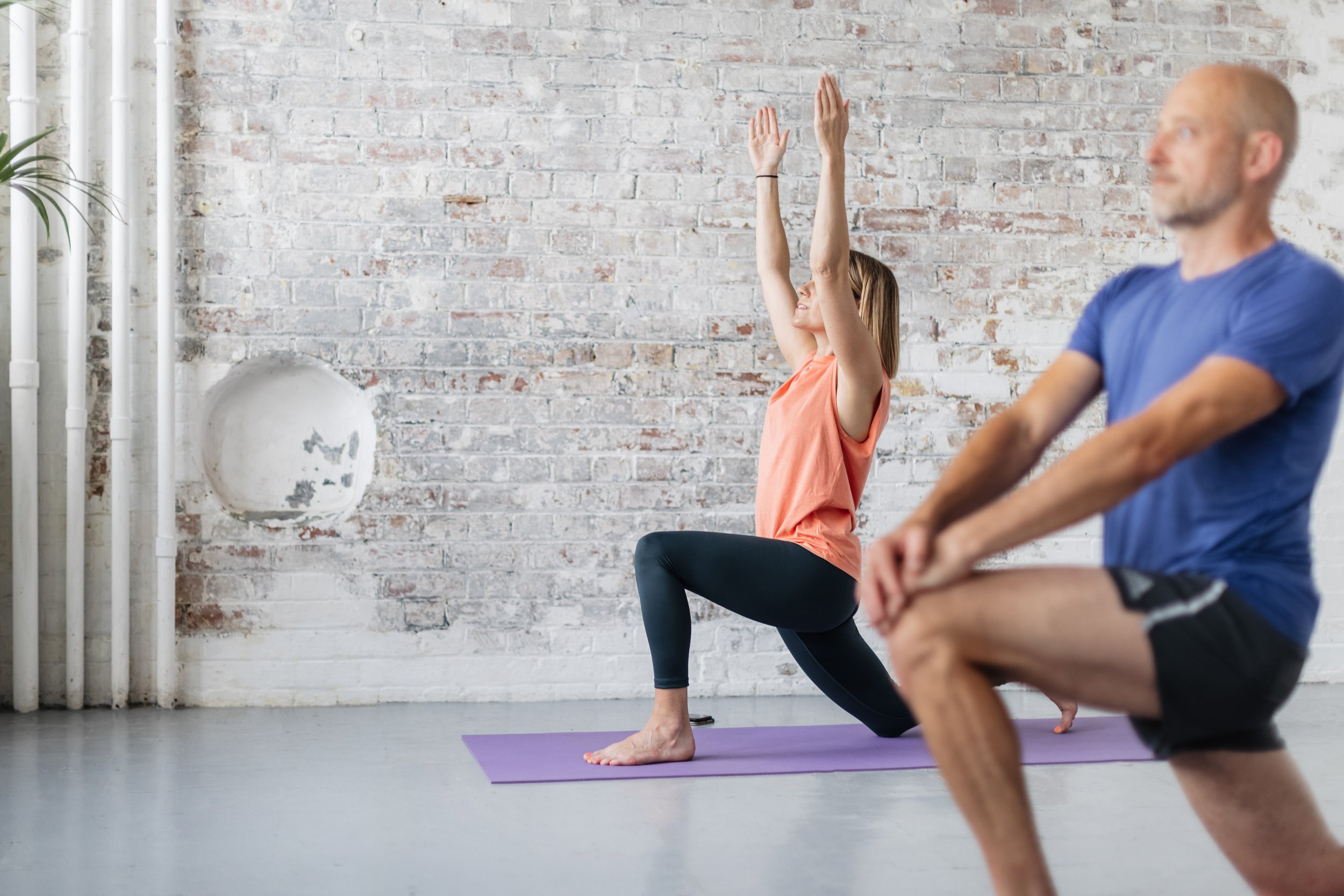
Instead of focusing on getting the form or breathing technique 'right,’, like a traditional yoga class, the TCTSY practice invites you to simply explore the present moment by moving your body and noticing whatever sensations come up.
Trauma-Sensitive Yoga (TCTSY) is all about practicing making choices. Whilst also acknowledging that for those with a trauma history this isn’t always easy. You’ll be offered different options along the way, and it's completely up to you how, or whether, you want to try them or if you want to follow along with me.

Trauma Centre Trauma Sensitive Yoga (TCTSY)
Trauma Centre Trauma Sensitive Yoga (TCTSY) is an intervention for complex trauma or chronic, treatment-resistant post-traumatic stress disorder (PTSD).
The foundations of the practice are based on yoga, trauma theory, attachment theory, and neuroscience.
TCTSY was designed specifically for survivors of chronic relational trauma.
TCTSY was co-created by relational trauma survivors, along with yoga teachers and experts in the field of trauma.
TCTSY originated at the Trauma Centre and is a program for the Centre for Trauma and Embodiment at the Justice Resource Institute in Brookline, Massachusetts, USA
Practicing Trauma Sensitive Yoga (TCTSY)

Trauma-Sensitive Yoga (TCTSY) uses physical forms and movements from Hatha yoga, but it’s not about following a class or doing it “right”. Instead, TCTSY is all about your own internal experience.
That shift, from focusing outward to tuning inward, is a big part of how TCTSY helps people with complex trauma. The power stays with you, not the facilitator.
By paying attention to sensations in your body and letting those sensations guide choices, TCTSY helps rebuild the mind–body connection and restore a sense of agency that trauma can take away.
“I can choose what to do with my body and life and relationships.”
_ TCTSY Participant
“Practising Yoga has given me hope”
- TCTSY Participant

What to expect from a TCTSY (Trauma Sensitive Yoga) session
Trauma-Sensitive Yoga (TCTSY) is an opportunity to safely (re)connect with your body.
As the facilitator, I will offer yoga forms and you’re invited to explore the present moment by moving and possibly noticing sensations in your body.
Trauma-Sensitive Yoga (TCTSY) offers an opportunity to explore making choices about what you may or may not be interested in or trying out.
Different options are presented and you have complete choice over how you choose to move.
We will work together to co-create the sessions in a way that feels safe and useful for you.
HOW Trauma-Sensitive Yoga (TCTSY) Differs From A regular Yoga Class
No yoga experience is necessary
There is absolutely no physical touch or yoga adjustments
The facilitator doesn’t move around the room. They stay on their mat or chair and practice alongside the participant(s)
The facilitator offers yoga shapes using invitational language
There’s no right or wrong way to practice the yoga shapes offered
No one is ever singled out or corrected
You can practice in a chair or on a mat or a combination of both
You can wear whatever you feel comfortable in
In group classes, participants don’t have to talk to each other
There’s an enrolmemt process to ensure the sessions are personalised.
You’re always free to leave the room or stop practising at any time. You may choose to re-join the session or not.
“Trauma victims cannot recover until they become familiar with and befriend the sensations in their bodies. ”
— Bessel A. van der Kolk, The Body Keeps the Score
Where you can practice Trauma-Sensitive Yoga (TCTSY)
One to One Trauma-Sensitive Yoga Sessions
If you're interested in exploring Trauma-Sensitive Yoga (TCTSY) on a one-to-one basis please read through the information on signing up for TCTSY
Pricing for individual Session of 50 minutes
£70 per session (I have a couple of concessionary spots - ask me if these are available)
Location: Dharma Shala, 92-94 Drummond Street, NW1 2HN
Or online via Zoom.

Research into Trauma Sensitive Yoga (TCTSY)
There have been a number of research papers, pilot studies and two randomized control studies into the efficacy of TCTSY. The results from these studies have been overwhelmingly positive.
Yoga as an adjunctive treatment for post-traumatic stress disorder: A randomized controlled trial.
This paper was published in The Journal of Clinical Psychiatry (2014) and featured in Bessel van der Kolk’s book, The Body Keeps The Score. The ten-week TCTSY intervention resulted in a clinically significant reduction in PTSD symptoms for female-identifying survivors.
You can read the full paper here
Click the button at the bottom of the page for more papers associated with this study
TCTSY RCT with email identifying veterans in the United States
The first paper from this four-year study with female-identifying veterans was published in The Journal of Alternative and Complementary Medicine (2021).
“Conclusion: The results of this study demonstrate that TCTSY may be an effective treatment for PTSD that yields symptom improvement more quickly, has higher retention than CPT, and has a sustained effect. TCTSY may be an effective alternative to trauma-focused therapy for women veterans with PTSD related to MST."
You can read the full paper here
More studies are currently underway looking into the efficacy of TCTSY in different populations, worldwide and cross-culturally. You can read the research papers of published studies below.